PHP2Shell: Critical PHP Vulnerabilities Enable Remote Code Execution
Two critical vulnerabilities in PHP could allow unauthenticated attackers to execute code on vulnerable servers and potentially expose sensitive process memory. Known as PHP2Shell, the flaws affect the PHP core runtime and require immediate attention from organizations operating PHP-based websites and applications.
SUMMARIZE WITH AI




- Oct 23, 2026


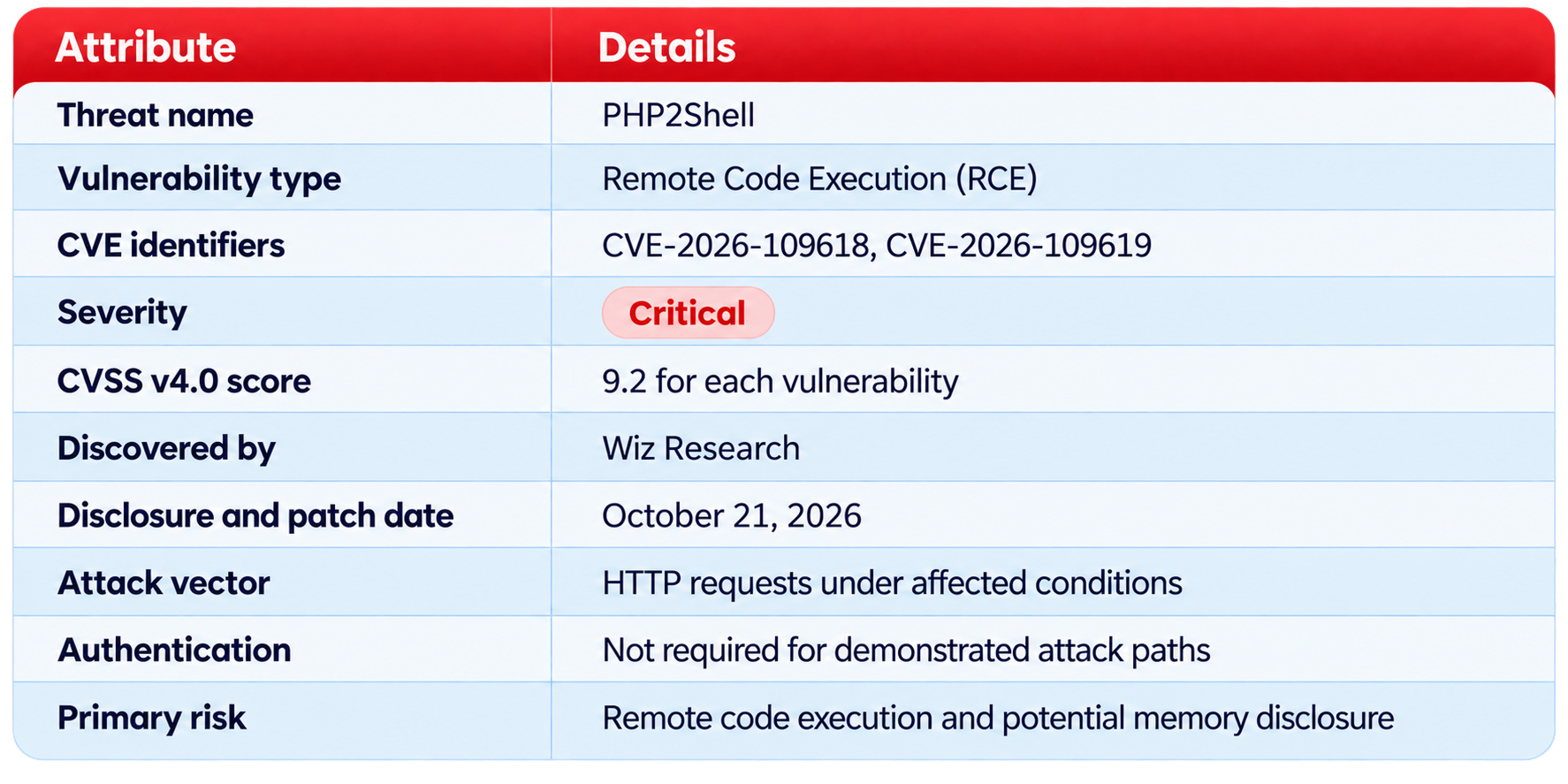
Disclosed on October 21, 2026, the vulnerabilities were identified by Wiz Research and carry a CVSS v4.0 score of 9.2 each. PHP has released security updates, and organizations should identify affected installations, apply the appropriate fixes, and investigate suspicious activity.
What Is PHP2Shell?
PHP2Shell refers to two critical remote code execution (RCE) vulnerabilities in PHP, tracked as CVE-2026-109618 and CVE-2026-109619.
The vulnerabilities involve memory-safety flaws in PHP's request processing and error-handling mechanisms. Under specific conditions, these flaws can allow attackers to trigger memory corruption or misuse to stale internal data, potentially leading to arbitrary code execution.
Because the vulnerabilities affect PHP itself, exposure is not limited to a particular content management system (CMS). Wiz Research demonstrated exploitation paths involving WordPress, Drupal, and Joomla.
PHP2Shell: Vulnerability Overview
Which PHP Versions Are Affected?
The vulnerabilities affect PHP releases dating back to version 5.4. On October 21, 2026, the PHP project released security updates for four supported branches.
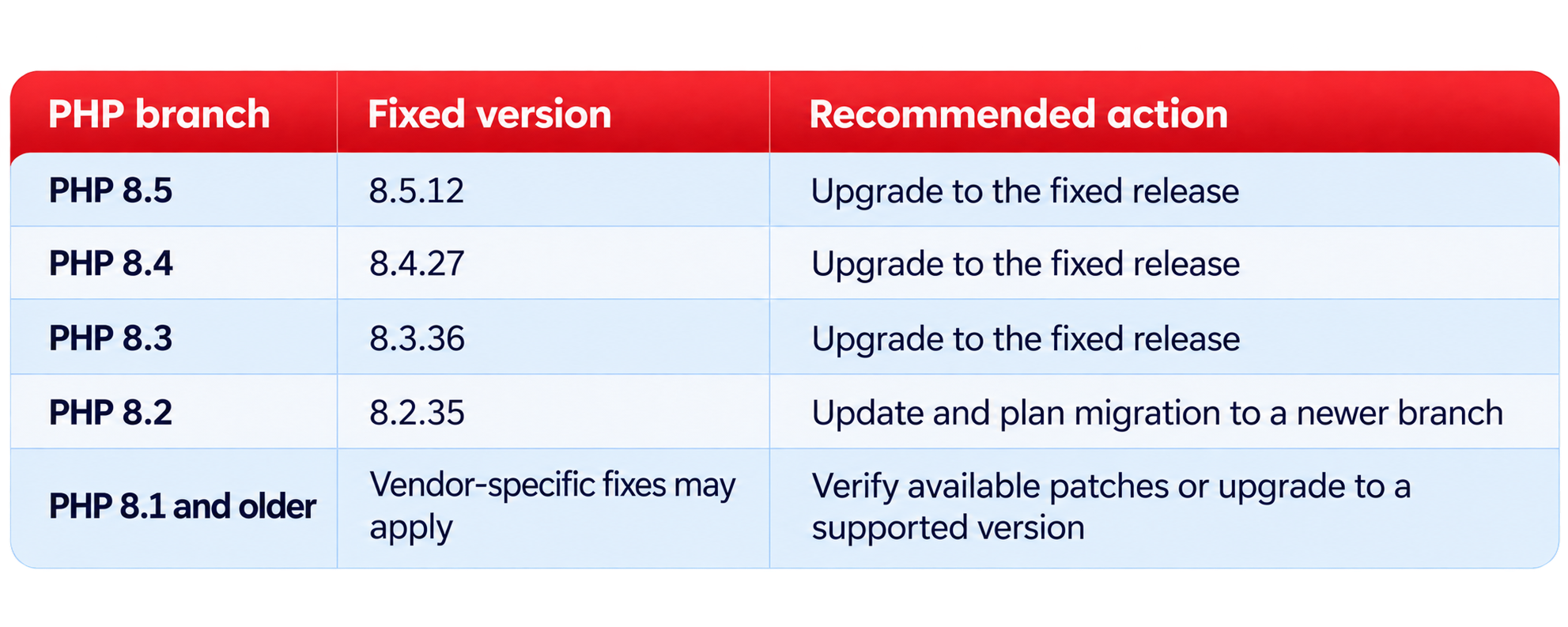
Organizations using operating-system or hosting-provider packages should verify that the relevant security fixes have been applied, including backported fixes that may not change the displayed PHP version.
How Does PHP2Shell Work?
PHP2Shell exploits memory-safety failures within PHP's runtime. Depending on the vulnerability and execution environment, the attack may follow this general sequence:
1. Crafted HTTP request: An attacker sends a request designed to trigger vulnerable PHP behavior.
2. Memory-safety failure: PHP encounters an error or inconsistent internal state during request processing.
3. Memory corruption or misuse: Runtime operations may process invalid or stale data.
4. Potential system compromise: Successful exploitation can enable arbitrary code execution with the privileges of the PHP process.
The precise exploitation path differs between the two vulnerabilities. Actual exploitability depends on the PHP execution model, configuration, and application behavior.
What Is the Potential Impact?
Successful exploitation could have serious consequences for affected organizations:
1. Remote code execution: Attackers may execute commands or code with the privileges of the vulnerable PHP process.
2. Sensitive data exposure: Process memory disclosure may reveal credentials, API keys, authentication tokens, or other sensitive information.
3. Application compromise: Unauthorized file changes, web shells, and website defacement may follow successful exploitation.
4. Service disruption: Malicious activity may affect application availability and business operations.
5. Further attacks: Exposed credentials or access to connected systems may enable additional compromise.
The extent of the impact depends on the privileges of the affected process and the resources accessible from the compromised environment.
How to Detect PHP2Shell Exploitation
Security teams should review application logs, endpoint telemetry, and network activity for suspicious behavior, including:
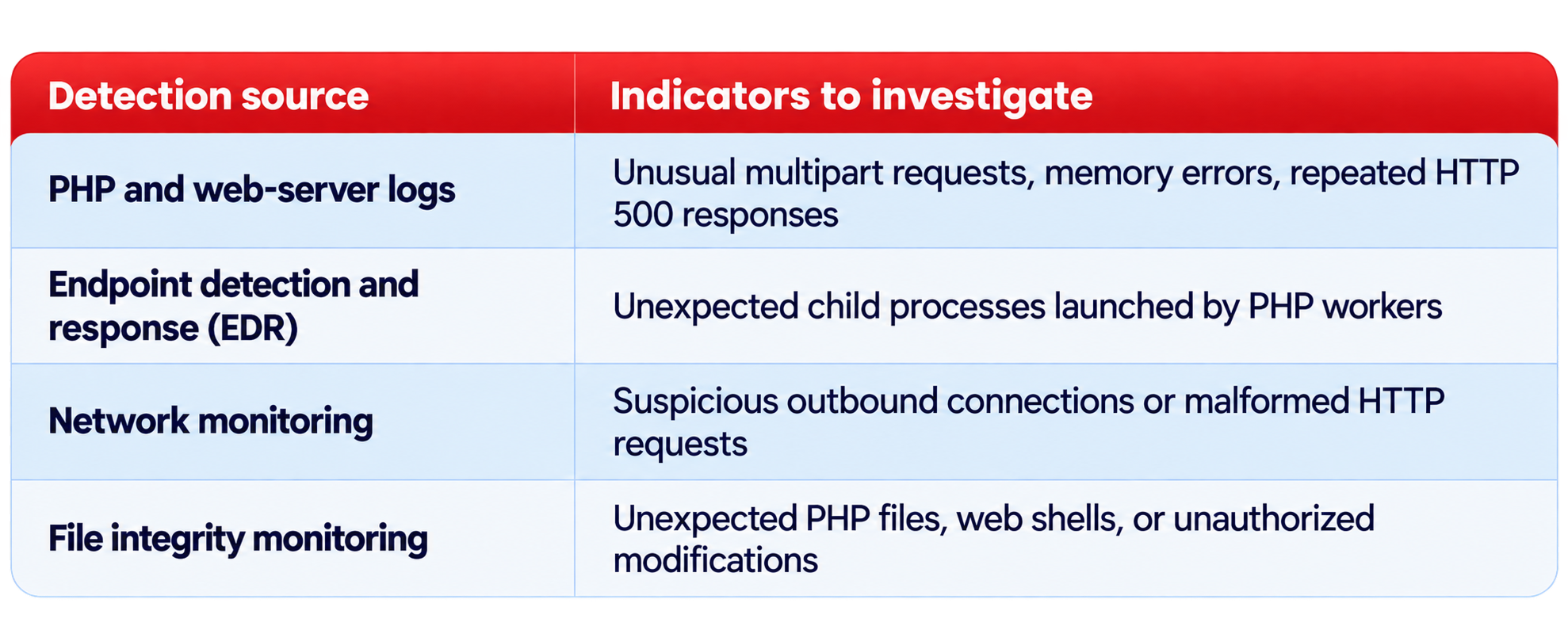
These indicators are not conclusive individually. Correlate findings across security tools and investigate suspected compromise before closing an alert.
How to Mitigate PHP2Shell
Organizations should prioritize the following actions:
1. Identify affected systems. Inventory PHP installations across public-facing websites, production servers, containers, and hosting environments. Check the runtime serving web requests, not only the command-line PHP version.
2. Apply security updates. Upgrade to the appropriate patched release or install a verified security update from the operating system or hosting vendor. Restart affected PHP workers and services to ensure the fixed runtime is running.
3. Apply temporary mitigations where necessary. Consult with the official PHP security advisory for configuration-specific risk reduction measures if immediate patching is delayed. These measures are not a substitute for applying the security fix.
4. Investigate suspicious activity. Review logs and endpoint telemetry for evidence of exploitation, unauthorized processes, or modified files. If compromise is suspected, preserve evidence, contain affected systems, and rotate potentially exposed credentials and secrets.
5. Strengthen ongoing monitoring. Implement automated PHP version tracking, vulnerability scanning, and security monitoring to identify outdated installations and reduce remediation delays.
Strengthen Your Application Security
PHP2Shell highlights how vulnerabilities in foundational software can expose entire application environments, even when individual applications have no known code-level defect. Organizations should prioritize patching, verify remediation, and monitor for signs of compromise.
Ebryx helps organizations identify security weaknesses and strengthen their defenses through application security assessments, vulnerability management, and managed detection and response.
Need help assessing your exposure?
Contact Ebryx to discuss your application security requirements.
SUMMARIZE WITH AI